

In 2003, a group of individuals in the Central African Republic began to consult on how they could contribute to the social and economic progress of their country. Inspired by the Bahá’í writings that state that human beings should be regarded as a “mine rich in gems of inestimable value” and that “Education can, alone, cause it to reveal its treasures, and enable mankind to benefit therefrom,” their attention focused on the state of pre-primary and primary education. Many communities, especially those in rural areas, had limited access to education, owing to the debilitating effect of years of internal strife on the nation’s educational system.
Building on experience they had gained in supporting informal educational initiatives, the group established Fondation Nahid et Hushang Ahdieh (Ahdieh Foundation) as a means to engage in a more systematic process of learning. While keenly aware of the challenges involved, the founders saw in the people of their country a vast source of talent that could, if channeled appropriately, be key in overcoming these challenges. Drawing on insights and training materials from Bahá’í-inspired organizations in Chad and Mali, they set out to learn about how to assist communities to establish and manage their own primary schools.
Developing a program through ongoing action and reflection
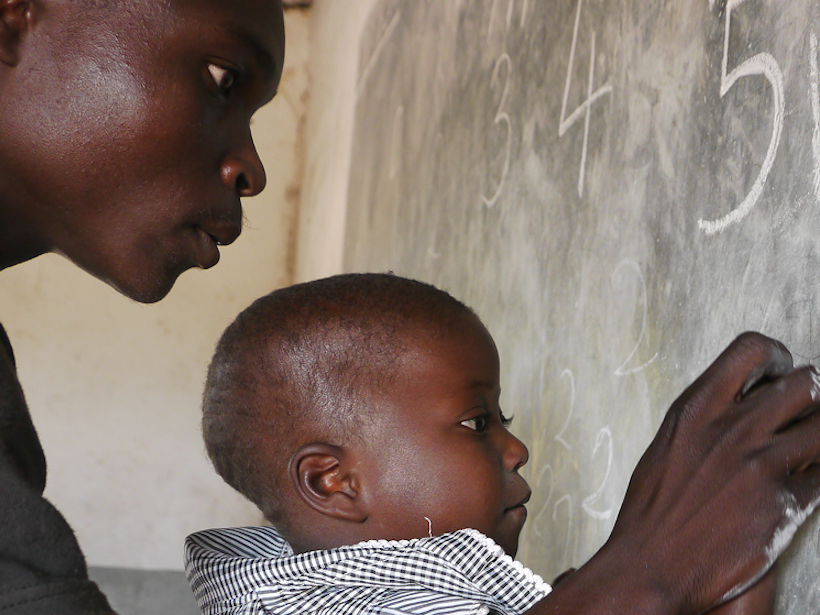
Among the first actions of the Foundation was a training seminar for some 20 aspiring teachers selected by their respective communities for the interest they had already shown in the education of young children. The purpose of the training was to help build the participants’ capacity to start kindergartens in their own communities. Five locally operated preschools which were supported fully by financial resources from within the community were subsequently established. The Foundation followed the work of these schools closely and gained insights into areas such as raising consciousness in a community about the nature of education, training new teachers, and building capacity in a community to sustain the livelihood of teachers and administer a growing school.
In its efforts to develop its program, the Foundation had to be conscious of the reality of the population with which it was working, and able to adjust its plans accordingly. For instance, many of the aspiring teachers were young mothers with limited formal education and responsibilities that did not allow them to participate in training programs of several months’ duration. In response, the Foundation adopted an approach to teacher training that wove together theory and practice: rather than requiring participants to relocate for extended periods, the Foundation offered training annually for one to two months, after which the teachers were encouraged to quickly apply in practice what they learned. Teachers were trained to offer one grade level at a time, starting first with kindergarten. Through regular visits from staff of the Foundation and a system in which more experienced teachers support newer ones, gradual improvements were made to the quality of instruction.
Naturally, the schools had to overcome many challenges as part of their evolution. In the early years, for instance, school inspectors were at times skeptical of the schools, which generally operated in simple structures constructed with locally available materials, or sometimes even under a tree. Nevertheless, through a continuous process of action, reflection, and refinement, the Foundation developed various elements of a program for the multiplication of community schools. Within five years, there were some 28 schools in operation and over 100 teachers who had received training.
Consolidating structures and enhancing collaboration
The promising results of the program led to requests from a growing number of organizations in other countries in Africa that aspired to follow a similar path of learning. In 2008, the Foundation began assisting the staff of these organizations to develop teacher-training programs in their respective countries.
To ensure that capacity for the implementation of the program continued to grow within the Central African Republic, a few university graduates from the city of Bangui were invited to join the organization. Five training sites were also established in various parts of the country to decentralize some of its activities. By 2011, the Foundation was working in 13 municipal areas with 33 schools providing education to nearly 2,800 children. Despite the general state of civil unrest in the country, the Foundation’s activities continued to develop. The quality of the education it offered had also earned the appreciation not only of parents but also of education practitioners and government officials across the country.
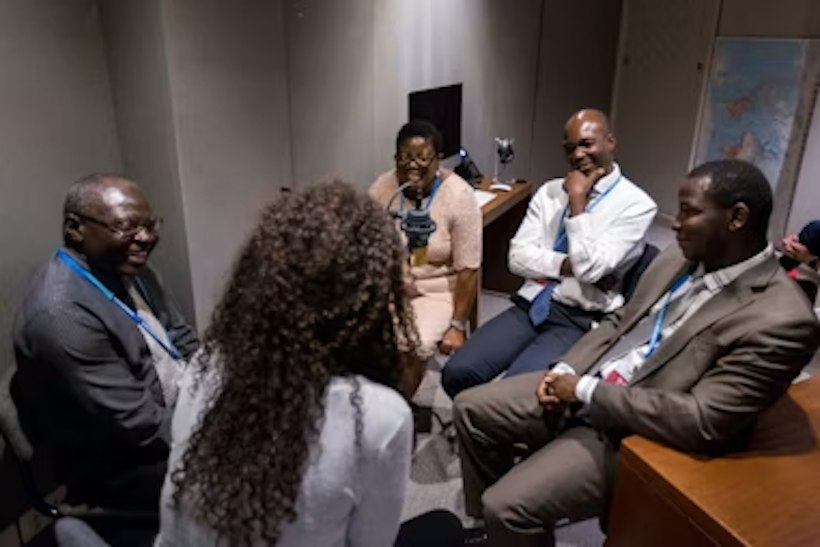
As collaboration with officials and other actors became stronger, the Foundation began to consider how it could participate more regularly in national dialogues about primary education. In April 2012, the Foundation organized a seminar for representatives of government and nongovernmental agencies during which ideas related to the purpose of education and the role of the teacher in society were explored. The following year, the Foundation entered into an agreement with the Ministry of Education providing official recognition for all schools established through its support. In 2014, the University of Bangui accredited the Foundation as a teacher-training organization and offered its collaborators access to degree programs.
Additional lines of action
As the Foundation gained experience in education, it found itself drawn more deeply into related concerns of the population.
For instance, a common challenge faced by many of the communities was children’s nutrition and health. The children attending the schools were often not adequately nourished and had difficulties concentrating during the school day. In response, the organization began assisting the teachers of certain schools, along with members of the community, to study materials aimed at building capacity to engage in highly productive, sustainable agricultural practices. These communities established and began tending to experimental agricultural plots, using the harvests to provide a meal to the students each day. Around the experimental plots, local farmers were also supported to generate, apply, and disseminate knowledge about how to diversify and increase the volume of food production in order to help meet the nutritional needs of families while also increasing their income.
Another line of action emerged at the request of parents and involved working with young adolescents who had graduated from community schools. Over the last several years, the Foundation has been assisting such youth to participate in a program that aims to raise promoters of community well-being. A number of these youth have, in turn, arisen to contribute to various processes of community life, such as education, environment, health, and agriculture.
At the onset of the COVID-19 pandemic, when most schools in the country had temporarily closed, the Foundation supported teachers of community schools, together with families of their students, to offer decentralized education according to national health regulations. Working with small groups of families in their homes, the teachers engaged parents in assisting students with their writing, reading, and arithmetic. As parents became more familiar with educational principles and skills, they began to see themselves more as active agents, in partnership with the teachers, in offering education to the younger generation.
At present, Ahdieh Foundation is part of a network of seven organizations in the region implementing the community schools program and consulting about various areas of learning. Together, they are working with more than 850 teachers who are tending to the education of over 24,300 students in about 190 community schools.
Since its inception, the evolution of the Foundation’s work has rested on the collective will of local communities, and its lines of action have been sustained by a steady rise in the number of human resources. As teachers have gained experience, they have begun to support newer teachers and to refine the content of the curriculum used in the classrooms. Several have also been assisted to advance in their tertiary education. In considering the questions that lie ahead, the organization has been reflecting on how to systematize and offer more widely in the country what has been learned over the years. In this regard, steps have been taken by the Foundation and the University of Bangui to jointly establish a Chair that will advance research on community education and offer accredited courses— thus contributing further to raising the country’s next generation of educators.