

Listen to Article
Environment
00:00
Environment
In various localities where Bahá’ís reside, individuals and communities are learning how to give practical expression to the conviction that humanity is organic with the natural world. “Nature is God’s Will and is its expression in and through the contingent world,” Bahá’u’lláh writes. Cast in this light, the natural world is a trust for which all members of the human family are responsible.
Efforts to contribute to environmental sustainability are taking a range of forms as diverse groups are learning how to redefine progress in ways that are more harmonious with the environment, whether through building capacity in communities to create sustainable patterns of life or exploring and cultivating attitudes and habits that could contribute toward stewardship of the planet for present and future generations.
“This span of earth is but one homeland and one habitation. It behooveth you to abandon vainglory which causeth alienation and to set your hearts on whatever will ensure harmony.”
—Bahá’u’lláh
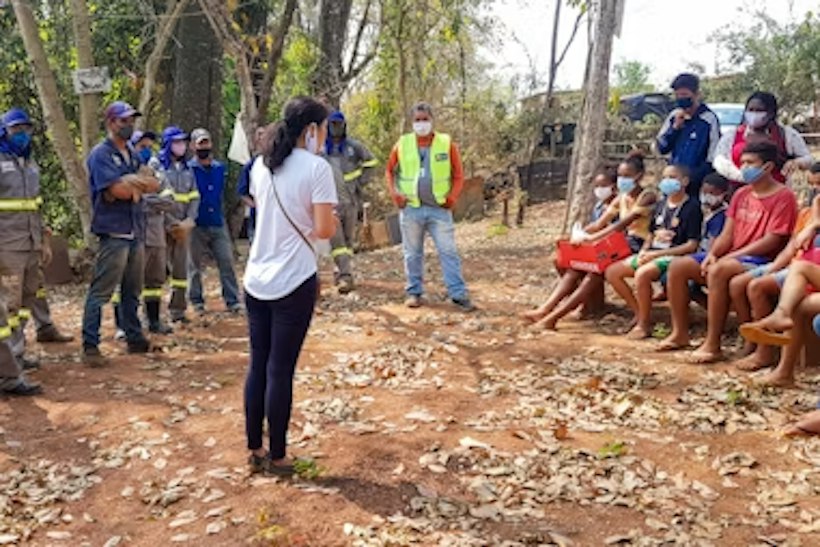
Young people are at the forefront of many community-based environmental initiatives. Every year, in diverse communities across the globe, youth are devising and carrying out thousands of simple projects that respond to some aspect of the natural environment. Whether in the form of ecological awareness campaigns in Ecuador and Kenya, tree-planting initiatives in Bahrain and Nepal, river clean-up projects in Costa Rica and Brazil, or collaborative efforts with local communities and agencies to enhance systems for recycling in the United States and India, such simple initiatives indicate a growing consciousness of the younger generationaround the imperative of safeguarding the planet’s resources.
In a number of places, sustained projects in the area of environment have also been established. A group of individuals in Iceland has been learning to have conversations about the moral dimensions of tree planting through the Skógar reforestation project, which was first initiated in the 1990s in response to the significant challenge that deforestation and soil erosion pose in the country. The project has brought the Bahá’í community into contact with various entities in the wider society including the Icelandic Forest Service under the government’s Ministry of Environment, which provides plants, technical advice, and financial contributions toward the initiative; the Soil Conservation Service, which contributes fertilizers; and members of the neighboring farming community. Initial conversations with universities are also exploring the possibility of using the land as a study site for multiple-use forestry. Most recently, a dialogue with other religious organizations has unfolded around the spiritual objectives of tree planting as part of the United Nations Environment Programme’s Faith for Earth initiative, which aims to “lay the foundation for inter-faith collaboration for sustainable and regenerative development to achieve the Sustainable Development Goals.”
Though still nascent, there are also accounts emerging of entire communities learning to collaborate together in support of the environment, with their efforts gaining in complexity over time. An example from the island of Tanna in Vanuatu provides a glimpse into the possibilities that are created through such collective action. As with many efforts in the area of social action, the initial impulse came through groups of young people who were consulting about the local environment with the support of a local Bahá’í-inspired organization. In light of the knowledge they were gaining through collective study, some of the youth arranged workshops on environmental awareness within their communities. As a result of these workshops and other informal projects carried out by junior youth, six communities, with the active support of their village leaders, decided to designate an area surrounding a source of water as protected, where no human activity could take place other than for conservation purposes. Two of the communities decided to replant species that are in danger of becoming extinct. The other four communities, catalyzed by the service projects of junior youth to raise awareness about the importance of protecting marine life and the dangers of overfishing, decided to take steps to protect the lagoon.
Through the modest efforts of the junior youth to raise consciousness, village chiefs were inspired to hold community gatherings to consult on the issues at hand. Steps were taken to protect the area, including placing a ban on fishing and putting up signs to demarcate it. Ecological camps supported by the Department of Forestry were arranged for young people to gain a deeper appreciation for the environment. After sufficient time, marine life that had been presumed extinct began to restore itself.
Efforts to regenerate the area had been attempted in the past, yet what seemed to be distinct about these initiatives was the collective vision that had been fostered and the role of the community in designing and taking ownership of the endeavors.
Many members observed that as they considered a spiritual dimension to the progress of their community—which involved reflecting on the importance of caring for the environment and gaining an understanding of the consequences of excessive materialism and competition that are driving unsustainable practices—they felt it was their moral responsibility to protect the lagoon and the area around it. Generations became connected to each other as young adolescents and youth drew on the insights and support of those older than themselves, and species that were once only known to some could now be experienced and appreciated by rising generations. Central to these efforts was the dynamic and harmonious interplay between individuals, the local institutions and village chiefs, and the communities themselves.
Other conservation initiatives on the island include the formation of committees to establish additional protected areas throughout the island, both land and marine; the restoration of coral reefs; the setting up of nurseries for tree planting around gardens, some of which have been a source of protection from cyclones; and the designation of areas to dispose of single use plastics. Groups of youth and young adults are also looking to better understand ways to address unsustainable timber logging practices, preserve clean water, revive endangered species on the island, and respond to soil erosion.