


Promotion of Community Schools
A significant proportion of Bahá’í-inspired schools in Africa, Asia, and the Pacific, some of which were mentioned in the previous section, have emerged through the assistance of development organizations learning about the promotion of community schools. A pressing concern to which many Bahá’í communities around the world have endeavored to respond has been the extension of academic instruction at the pre-primary and primary school levels where the reach of the national education system is significantly limited. Since the early 2000s, a growing number of Bahá’í-inspired agencies in the aforementioned regions have been working toward the multiplication of community schools in villages and towns (more information about the history of this program is available here). Presently, the establishment of community schools is being supported by organizations in 22 countries. Collectively, these agencies collaborate with approximately 2,000 teachers in 575 schools reaching up to 43,000 students.
Organic growth of a school
Drawing primarily on locally available resources, community schools often begin with a single class at the preschool level. They expand organically according to circumstances in the locality, gradually adding more teachers and grade levels up until the last year of primary school, and in some cases advancing beyond the primary level.
Ongoing teacher training
At the heart of the work of the organizations promoting community schools is the development of a teacher-training program that helps build the capacity of youth and adults to offer pre-primary and primary academic instruction to children in their communities. These organizations are animated by the vision offered in the Bahá’í teachings of raising up teachers who are “distinguished for their high standards of conduct and general excellence” and are “scholars and educators with a thorough knowledge of sciences and arts.” The approach to teacher training seeks to integrate theory and practice by creating regular opportunities for the teachers to study relevant content and reflect with others on the experience they are gaining in the classroom.
“This school is one of the vital and essential institutions which indeed support and bulwark the edifice of humankind.”
—‘Abdu’l-Bahá
The community as a protagonist
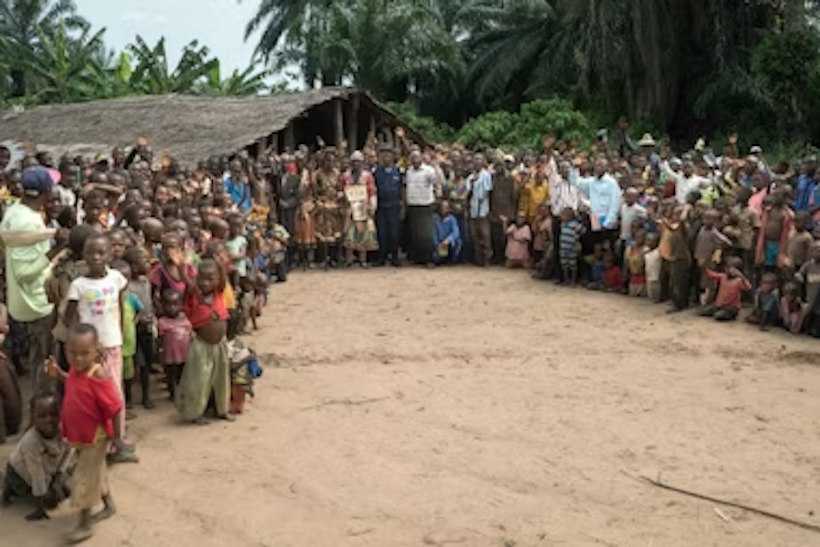
A basic conviction held by the organizations promoting community schools is that local communities can be protagonists in providing for the education of younger generations within their society. In this regard, experience highlights the importance of communities having a sense of ownership around the process of education and support for the establishment of a school. Thus, much of the effort of the organizations is focused on helping communities explore their aspirations for the education of their children as well as supporting them in considering how they can take charge of meeting this imperative. As consciousness is raised around this important responsibility, individuals are identified within their localities who can be entrusted with the education of the younger generations. Once schools are established, community members often demonstrate their commitment to sustaining the schools in a variety of ways beyond the payment of school fees. For instance, individuals have provided food for the students and teachers, contributed land, assisted with the construction of classrooms, and maintained school agricultural plots.
Experience gained in various parts of the world, including the examples cited in this section, offers a glimpse into the potential that exists when a spirit of reciprocity and mutual support is established among various actors concerned with the education of children—the school, teachers, parents, and community at large. Rather than being seen as a passive deliverer of content, a teacher can be an essential protagonist, along with other collaborators, in the spiritual and intellectual development of children and in the overall progress of a community. In addition to assisting children to acquire knowledge in various subjects, teachers can help nurture a culture of learning in a community, cultivate a spirit of service to others, and promote the application of principles such as love, unity, and trustworthiness. As an integral part of the life of a population, a community school can also learn to contribute more deliberately to various aspects of community life as it gains in strength. Often in simple ways and as an organic extension of the education it provides, a community school can, for example, begin to undertake systematic action in areas such as local food production and health, and can provide access to a wide range of knowledge through means such as the establishment of a library.