


Agriculture
The Bahá’í teachings place agriculture at the heart of community life and urge that special regard be paid to the advancement of this field. “The fundamental basis of the community,” ‘Abdu’l-Bahá states, “is agriculture, tillage of the soil. All must be producers.”
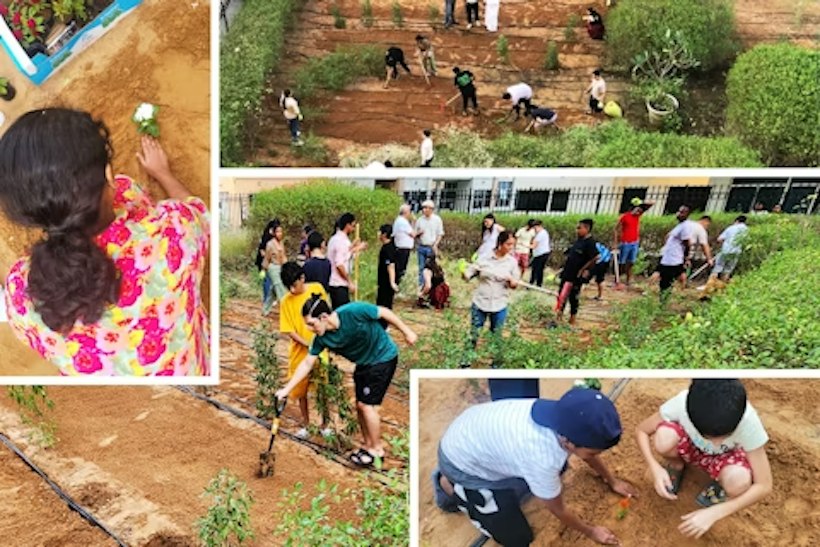
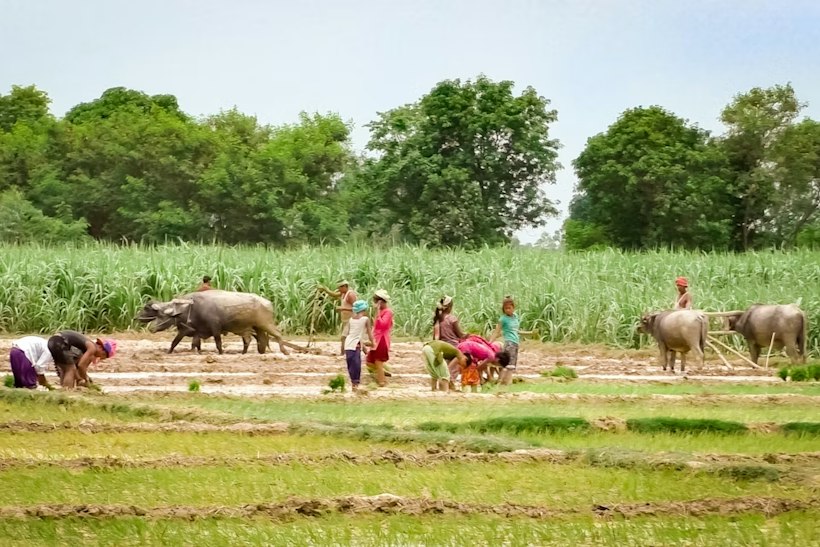
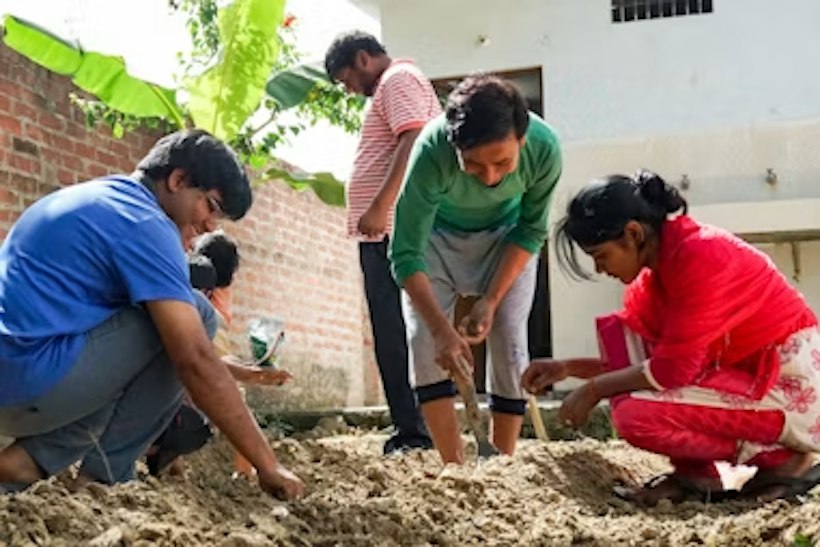
A range of initiatives and projects inspired by these teachings have emerged over the decades to contribute to agricultural development. In both rural and urban settings, groups of individuals have collectively undertaken crop production or animal husbandry activities to improve food security and nutrition within their communities, as well as to generate income for families. Some have established schools offering technical training in agriculture or organizations with the aim of building capacity in farmers, while others have formed village farmers’ groups.
In Venezuela, as a response to challenging economic conditions and food shortages, groups of families and their friends initiated pilot farming projects in a number of localities. The approach initially involved consultation with members of various communities. Steps were taken to establish family vegetable gardens at homes in addition to communal lands, gradually extending the initiative to some 10 locations. As these efforts progressed, opportunities emerged for neighbors to learn alongside one another by sharing experience related to good agricultural practices. Such interactions also helped foster a spirit of love and unity between families and friends. Over time, these initial projects extended beyond rural areas to include around 100 backyard gardens in urban areas. The ensuing conversations and interactions, together with the support of local institutions, also led to the emergence of complementary lines of collective action, such as families sourcing potable water for their community, finding alternative means for the education of children during the pandemic, and initiating other small projects for economic development.
In Mauritius, a non-profit agricultural learning center was founded by a couple who identified a need to make nutritious organic vegetables accessible to everyone in the community. The farm center was established with the aim of removing barriers to the equitable supply of food by strengthening local food systems. A notable initiative of the organization has been the involvement of 150 young people in a training related to organic farming and the development of entrepreneurial capabilities for agricultural social enterprises oriented toward community development. Among the activities of these youth have been efforts to establish community gardens and to grow their own supply of vegetables at home, thereby reducing their living costs. The organization strives to involve local communities in its work and has received support for its programs through public grants.
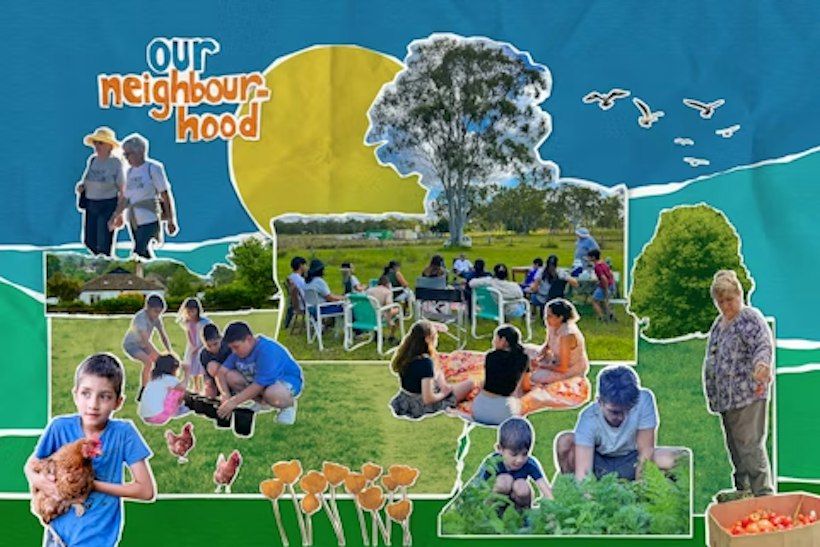
In urban settings, local initiatives have also given rise to learning about agriculture as a means of community development and as a response to pressing concerns in society. In the United Kingdom, a community garden was initially set up by a group of young people to create a shared vegetable plot as well as more green space in their neighborhood. Over several years, this initiative led to regular gatherings of neighbors who would naturally come together to socialize in the garden. During the period of restrictions created by the coronavirus pandemic, the garden became an important community space to support families in need of food supplies. A wooden hut was set up in the garden, serving as a community hub where non-perishable food supplies and books could be made easily accessible to neighbors.
“Strive as much as possible to become proficient in the science of agriculture, for in accordance with the divine teachings the acquisition of sciences and the perfection of arts are considered acts of worship.”
—‘Abdu’l-Bahá
In Canada, an urban farming initiative was established to rehabilitate backyards in Toronto and convert them into spaces to grow nutrient-rich and organic seasonal vegetables. The endeavor serves a part of the city that is considered a “food desert,” where residents do not have easy access to grocery stores. Youth living in the neighborhood have also taken part in work on a nearby farm, and junior youth have been included in the study of materials related to nutrition and farming. In addition to backyards, crops are also grown in greenhouses that are open for youth to further cultivate their interest in agricultural science.
In Singapore, a group of individuals who were exploring how to serve their community reached out to the National Parks Board in order to use part of a park to foster ties between neighbors through gardening. They were connected by the Board to a preschool that needed volunteers to manage a garden that had fallen into disrepair. After the group devised a proposal, the school contributed some funds for the garden and access to water, while the Board provided seeds and soil. What was important from the outset was a unity of vision between the group and the school, which involved connecting the younger generation to principles related to sustainability, building an appreciation around food production, and bringing together members of the neighborhood to work collectively around this endeavor. Throughout the process, the group employed principles of sustainable planting, using recycled car tires and bottles as planter bed borders, fallen tree stumps as garden stools, paper waste and old cardboard boxes for mulch, and domestic kitchen waste for composting. Many have shared that the garden has cultivated a greater sense of trust within the community and has also become a place of friendship and diversity, where the younger and older generations from many backgrounds come together to exchange stories and insights. Within the space of nine months, the initiative expanded from engaging 15 individuals to approximately 60.