

Listen to Article
Arts and Media
00:00
Arts and Media
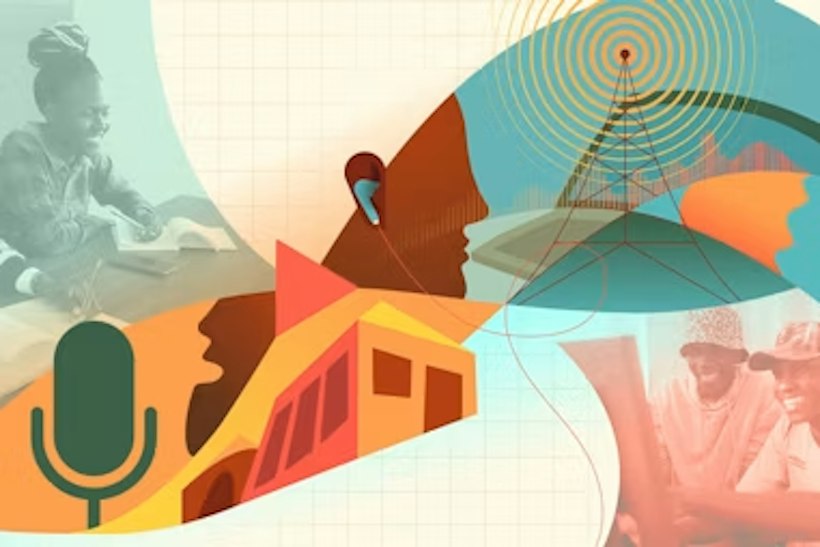
The Bahá’í teachings give particular significance to the arts, asserting their capacity to “uplift the world of being” and to “awaken noble sentiments” among the masses of people. Inspired by these and other writings of the Faith, individuals and communities have been learning to use various means of communication to help inspire high aims and raise consciousness about principles pertinent to the material and spiritual progress of a population.
They have been creatively endeavoring to express concepts and themes drawn from the principles of the Faith in order to move hearts to contribute toward constructive social change.
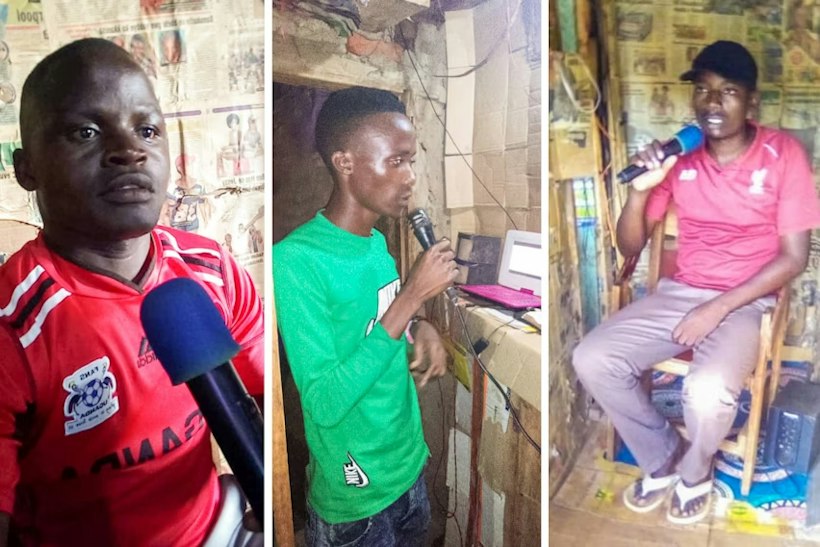
Some early efforts in the field of the arts and communications media have involved the formation of Bahá’í radio stations in Latin America and Asia, such as Radio Bahá’í Soloy in Panama, which was established in the 1980s to give voice to and serve as an educational and cultural channel for indigenous peoples. Some of these radio stations have been creating content in the form of original songs, stories, and interviews inspired by concepts such as service to society, cohesiveness, love, and generosity.
A number of dance workshops and theater companies were also created over the years in an effort to raise awareness about certain social issues through the arts. One such example is the Children’s Theater Company in the United States, which works with children and youth between the ages of five and nineteen to produce musicals and perform them for the general public in communities within New York City. Cast members meet regularly to reflect on the social and moral implications of the musicals, which address such themes as racial unity, the advancement of women, the elimination of extremes of wealth and poverty, and preservation of the environment. In Russia, the Association for Creative Moral Education (ACME) uses arts and media to introduce moral education lessons into schools in the Republic of Tatarstan. Through its Golden Way (Altyn Iul) program for social competence and ethical decision making, it utilizes video skits presenting conflict situations of varying natures, which form a basis for discussion. More than 8,000 students in over 40 schools and other educational organizations have participated in this program. The organization also assists youth to make short films conveying ethical and moral concepts to their peers and offers training to teachers, social workers, and pedagogues. Drawing on a similar methodology, the People’s Theatre in Frankfurt, Germany annually trains 10 to 15 young people to implement interactive theater projects in schools as well as other settings such as juvenile detention centers and senior citizen homes. Reaching over 10,000 people every year through some 900 shows, the participatory skits promote qualities such as compassion and friendship and encourage participants to develop the ability to consult and transcend conflicts through identifying points of unity.
In recent years, groups of Bahá’ís in a number of villages and neighborhoods have engaged in a process of learning aimed at creating and sharing meaningful content within their communities through means of communication most suited to their settings. They have utilized such means as film, music, and theater in a way that raises collective understanding and contributes to the transformation of their social environment, leading at times to the creation of community-based media projects. The following are examples of such efforts in the area of music.
In a neighborhood in Sydney, Australia, a group of young friends participating in Bahá’í educational programs have been creating songs to instill hope and express the noble aspirations of individuals and families in their neighborhood, which has historically been portrayed negatively in the media. Through this process, the youth have been describing how they have been empowered to be the change they want to see in their community, highlighting starkly different themes to those widely promoted in the community. The group's efforts have been recognized by various news outlets in the country as a source of social cohesion, and the members have been invited by local institutions to facilitate discussions about the themes raised in the songs among school students, teachers, and other community members. Youth participating in the junior youth spiritual empowerment program in Gran Canaria, Spain, have also been learning over the years about the influence of music on hearts as they compose songs to share their vision for society. Developed through workshops held during junior youth camps as well as in other spaces, the songs, which have now been recorded on several albums, are performed in annual community concerts and other events. What began as an informal initiative among an expanding group of friends, “Nuestra Voz” (Our Voice) has formalized into a community-based media project.
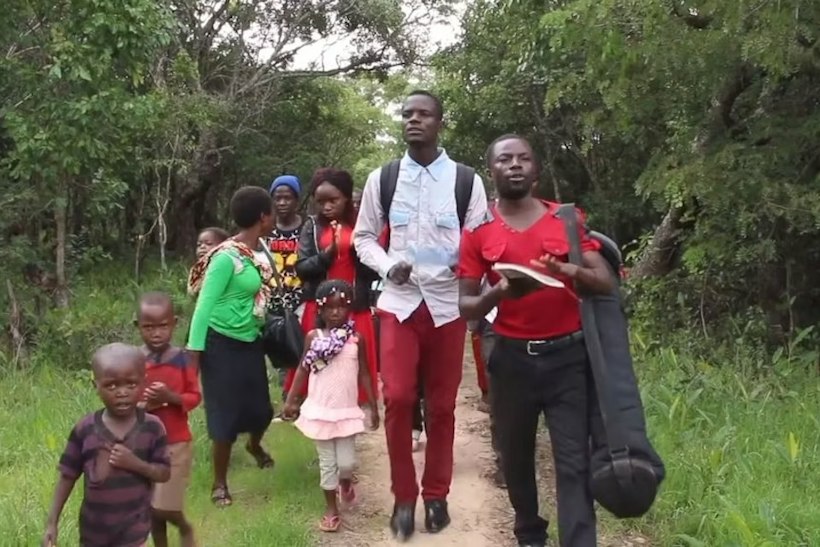
In some communities where the arts are a central feature of culture and where music is naturally infused into various aspects of life, such as in the Democratic Republic of the Congo, choirs have been composing and sharing songs to raise awareness around profound and uplifting spiritual themes. These songs have also been an important means to share insights with those who have not had access to academic education and are not able to read. Members of the Bahá’í community in Mbuji Mayi have been learning about how to create and share songs, inspired by elevated concepts, as a natural part of community life. Some of these songs have become widely known within the broader community as they have been shared in various gatherings and have stimulated meaningful dialogue. As one example, a group of young adolescents in the community has described how the songs help them to think more about the principle of justice, and how they have felt more empowered to ask constructive questions in instances where they observe expressions of injustice in society.