

Listen to Article
Releasing the Potential of Youth
00:00
Releasing the Potential of Youth
If development is viewed in terms of the capacity of a population to take charge of its spiritual and material progress, then the empowerment of young people assumes particular significance.
The Bahá’í writings describe the period of youth as life’s springtime—“the choicest time of life.” During this period, young people will need to progressively acquire the knowledge, abilities, qualities, and skills that will prepare them for the world they will inherit. Regardless of their social situations, young people have energy, idealism, and the desire to contribute to the betterment of the world.
Over the years, Bahá’í communities and institutions around the world have striven to learn about educational processes that would enable youth to pursue a twofold moral purpose—that of fostering their own growth and contributing to the upliftment of society. A range of initiatives has emerged as a result, including moral education efforts, projects that offer tutorial assistance, special training programs in one or another area of community service, organizations that provide support for higher education, and formal secondary and tertiary institutions that provide higher academic training. Animated by a desire to explore the enormous potential of young people, at the heart of this learning process has been inquiry into the content and methods that enable youth to draw on humanity’s intellectual and spiritual heritage as they analyze the world around them and take steps to improve its conditions.
“After a time he enters the period of youth...His faculties of observation are broadened and deepened; his intelligent capacities are trained and awakened; the limitations and environment of childhood no longer restrict his energies and accomplishments.”
—‘Abdu’l-Bahá
While the previous section on Education includes a few examples of formal educational institutions that engage young people, what follows illustrates a wider range of projects and programs that have striven to contribute to the spiritual and intellectual development of youth. The examples below of selected initiatives offer a small sampling of endeavours, formal and informal, that have emerged in different communities that focus on supporting youth along their educational and professional paths. In addition to such efforts, there are a few programs that have emerged over the years through the efforts of several Bahá’í-inspired organizations around the world that are being drawn on more widely. The page on Moral and Spiritual Empowerment of Junior Youth discusses a program for young people from the ages of 12 to 15—an age group that represents a population of enormous talent for every community. For older youth, the page on Preparation for Social Action describes a rigorous educational program that aims at raising “promoters of community well-being” who are assisted to develop the capacity to take collective action in fields such as education, health, and food production and to contribute to the overall well-being of their communities. Indeed, a significant proportion of social action efforts illustrated in this publication have sprung from the initiative of groups of young people involved in educational processes that recognize their inherent capacities, help them fulfill their noble aspirations, and assist them to channel their energies toward the betterment of their societies.
In different realities, communities and institutions are finding ways to assist youth to obtain an education that enables them to pursue a life of meaningful service to society. In many places, groups of youth support one another in this regard, in some cases leading to the creation of sustained projects, such as the community education center in India. What follows is a selection of other formal and informal efforts in a few communities around the world that are contributing to the intellectual development of young people, and in some cases helping them to identify and pursue a professional path.
Tutorial center for junior youth in Malaysia
In a neighborhood in Malaysia, a few friends began to observe a gap in literacy and mathematical and scientific knowledge among those aged 12 to 15. Given how consequential this period is in a young person’s educational path, parents and their neighbors in the community were consulted and the idea of an after-school tuition center emerged. To provide a conducive space for learning, materials were compiled and capable teachers sought. In order to provide financial support for teachers and materials, as well as the rental of a suitable facility, an arrangement was devised whereby those who could afford to pay for tuition would do so while those who were unable would be subsidized. The friends involved are now learning how to enable more young people in the locality to offer their services toward the tuition center. They are also learning how to strengthen relationships among all participants who come from diverse backgrounds, especially those from historically marginalized communities.
Community-based tutorial support for youth in South Africa
In a neighborhood in Mahikeng, South Africa, as a response to the adverse effects to learning caused by the global coronavirus pandemic, a group of people in the community, together with the support of a local official and village chief, arranged a daily program with the aim of assisting students to improve their academic results and to study materials related to spiritual principles and service to society. Attention was given to identifying educational content that effectively supplemented the youth’s formal schooling as well as to drawing on the support of teachers in the community. Though a modest effort to support youth to advance both spiritually and intellectually, these steps have assisted larger numbers to feel a greater degree of coherence in their lives as they identify how they can continue to contribute to the progress of their community through their work and service.
Assisting young people along educational pathways in the Netherlands
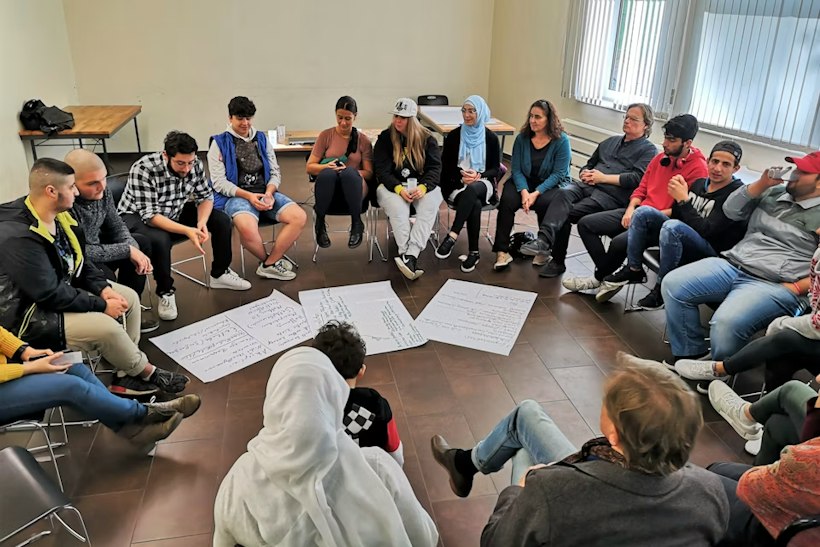
A group of youth and young professionals in Midden, the Netherlands, reflected on the systemic forms of injustice and unequal access to education that exist in their neighborhood and that narrow employment and income-generating prospects for many young people. Over several years, the process of action and reflection in which they were engaged together with the youth and their families became formalized, and an organization called the Breakwell Institute was formed. This development allowed the group to more effectively collaborate with local agencies, including community centers, organizations, and a mosque, to support the families. Continued efforts to learn about supporting young people have led to the gradual development of educational materials which assist youth to identify ways to channel their talents toward the betterment of their societies and explore potential avenues for study and work that correspond with their noble aspirations.
Scholarships for tertiary education in Zambia
In Zambia, the Bahá’í community has been learning over a few decades about how to support youth who have been facing obstacles related to their academic education. Many young people, particularly in the rural areas of the country, have experienced difficulties obtaining adequate funding to be able to pursue higher education. Starting as a personal initiative, a number of individuals began financially supporting a handful of youth to enable them to benefit from both academic education as well as the spiritual education they were already receiving through their participation in various programs offered by the Bahá’í community. To systematize these efforts, a fund for education was created. Over time, the Lomthunzi Foundation was established as a means of further formalizing the fund as well as helping young people to enhance their capacity to make sound choices related to personal growth and their contribution to the advancement of society. A formal scholarship program eventually emerged to assist such young people who require financial assistance. Beyond this support, the Foundation provides guidance and counseling services and connects youth to schools. It has also been accompanying youth to seek out existing support offered through government and civil society programs as they cultivate skills to take ownership of their further education.
Collaborative Action Research in Canada and the United States
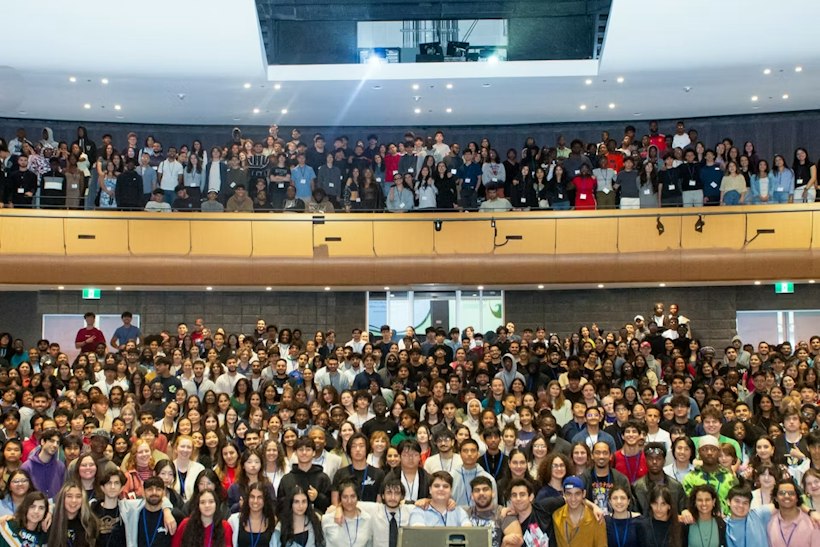
In the United States and Canada, four Bahá’í-inspired organizations—the Center for Studies in Community Progress, Coherent Development Research Institute (CDRI), Colibri Learning Foundation, and Wordswell Association for Community Learning—have initiated a process of collaborative action research around shared areas of endeavor. The network convenes periodic reflection spaces to exchange insights, share approaches and enhance understanding of the various forces in society operating on the lives of youth that influence their attitudes and the choices they make. In order to assist youth to navigate these realities and connect to deeper sources of motivation, the network of organizations has been learning how youth can increasingly develop certain capacities, skills, attitudes, and convictions that can help them meet their noble aspirations. The organizations have also been learning how to assist youth to view the choices they make around education, work, and family life as part of a life of service in which all of the components interact with and enhance each other. In practice, strategies to assist the youth have included daily academic tutorial assistance, scholarship application support, camps for more intensive study, mentoring, career guidance, and internships, as well as community service projects and workshops for families to explore themes such as the purpose of education and work.