


In Sub-Saharan Africa, where approximately two-thirds of the population is engaged in farming on either a full- or part-time basis, the past decades have provided an especially rich opportunity for learning about the application of spiritual teachings and scientific knowledge to the area of agriculture. The section on Systematization of Learning describes a learning process among a growing number of Bahá’í development organizations on the continent engaged in agricultural research together with farmers. Below are a few glimpses of the actions under way.
In Uganda, the Kimanya-Ngeyo Foundation for Science and Education has established an agricultural research farm for participants in the Preparation for Social Action program to apply the knowledge and capacities they gain from their study. A group of youth studying a text that assists them to make well-informed technological choices carefully considered an offer they had received from a larger organization promoting maize monoculture with high usage of chemical fertilizers and pesticides. Recognizing the long-term economic and environmental implications of the proposed system, they politely declined and continued to focus on exploring more sustainable agricultural approaches that could serve the community’s needs more effectively.
In Zambia, the Inshindo Foundation has been engaging more than 500 farmers in the study of materials on sustainable food production on small farms. The Foundation has also supported a campaign promoting backyard gardens and has launched a Center for Community Agriculture. The Center, which was created in collaboration with the local government, includes a seed bank and a simple laboratory open to the community. The Center also provides a space for study, exchange of insights, and experimentation with farming techniques.
In scores of villages in the Democratic Republic of the Congo, community agriculture groups have been formed that collectively work to apply certain principles—such as mutual support, consultation, and service—to their food production efforts. In many community schools, teachers have been able to strengthen agriculture education and have established or improved simple food production plots for the school. In some cases, conversations have extended further into the community and led to refinements in agricultural practices of families. Educational programs for youth that build capacity for social action have also led to an increased interest in this area and to the emergence of small agricultural initiatives.
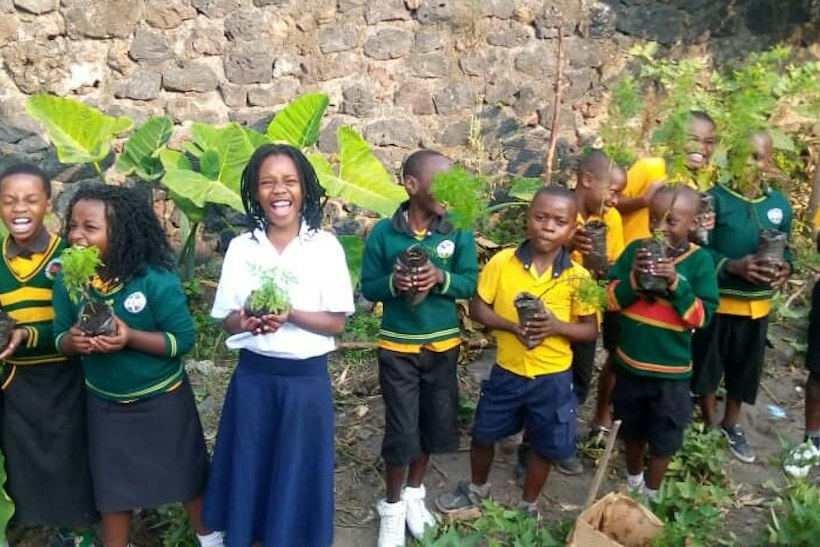
Building on these processes, Fondation Erfan-Connaissance, which has promoted the establishment of community schools in the Kivu region of the country since 2007, began to incorporate materials on agriculture in its teacher training seminars in 2016. Through this, the organization has aimed to develop the scientific capabilities of teachers and parents around food production and nutrition. Such training, combined with ongoing visits, has also assisted teachers who typically work as farmers to increase their household income. In some of the community schools where there are sufficient resources, plots have been established to grow food for students and to provide a space for them to learn about food production with their families. From these initial efforts to broaden the scope of the training of teachers, a large number of backyard gardens have emerged, and a seed bank has been established in one of the villages in the region, serving some 1,500 farmers.
In the more urban context of Goma, teachers have supported the establishment of backyard gardens with the support of the families of their students. Many of these teachers have noted how the process of learning to manage and nurture a garden has enhanced the patience, determination, and generosity of their students. Others involved have also observed a shift in the nature of interactions between families in neighborhoods with backyard gardens, in some instances showing glimpses of greater collaboration and collective endeavor. In one neighborhood, for instance, six families collaborated closely to grow medicinal plants and food crops. Some were able to sell their produce in the local market.
In the Nshimbi village of South Kivu, a local teacher together with an agronomist from Fondation Erfan-Connaissance began a conversation with the village chief about the need to diversify food production systems and establish a seed bank. As a result of these initial conversations, the chief convened a meeting with over 500 individuals, which led to the allocation of two large plots of land to produce seeds and cuttings of a variety of species. The community took ownership of the project by contributing materials for the seed bank and engaged a local development organization to help with its construction. Soon, various committees were formed to systematize the work of the seed bank—a management committee to organize meetings and handle the bank’s records, a monitoring committee to distribute seeds, and an advisory committee including the village chief to safeguard the integrity of the initiative and ensure that it reflects the values of the community. A number of other groups have since emerged around the seed bank related to the sale of produce, animal husbandry, and adult literacy. Over the course of a year, membership increased from 25 to 200 individuals. Community members have noted that the initiative has helped the village respond to the challenge of malnutrition and has encouraged women to engage in more community consultations.