

Through many years of research and action to address the needs of rural populations in Colombia, FUNDAEC developed an alternative secondary tutorial school system that aimed at building the capacity of young people to become protagonists of their own development. The “Sistema de Aprendizaje Tutorial” (SAT) program has been offered for several decades, reaching well over 100,000 students in Colombia alone, and has been implemented in several countries in Latin America as a fully accredited, formal yet flexible option for secondary education recognized by the government. To respond to the interest shown in SAT by an increasing number of Bahá’í-inspired organizations around the world, FUNDAEC modified some of its curricular elements and assembled them into the Preparation for Social Action program.
In several countries, the SAT program continues to be offered as a fully accredited option for secondary education. One example of this experience is in Honduras where Asociación Bayan has been implementing this program for over three decades. While in the initial years of its establishment the organization was involved in rural health in the department of Gracias a Dios, in the mid-1990s, it turned its attention to the field of education. Seeing that only primary level schooling was offered in the area—a factor that limited the development of human resources in the region—the organization began to collaborate with FUNDAEC, having learned about the efficacy of its programs in Colombia.
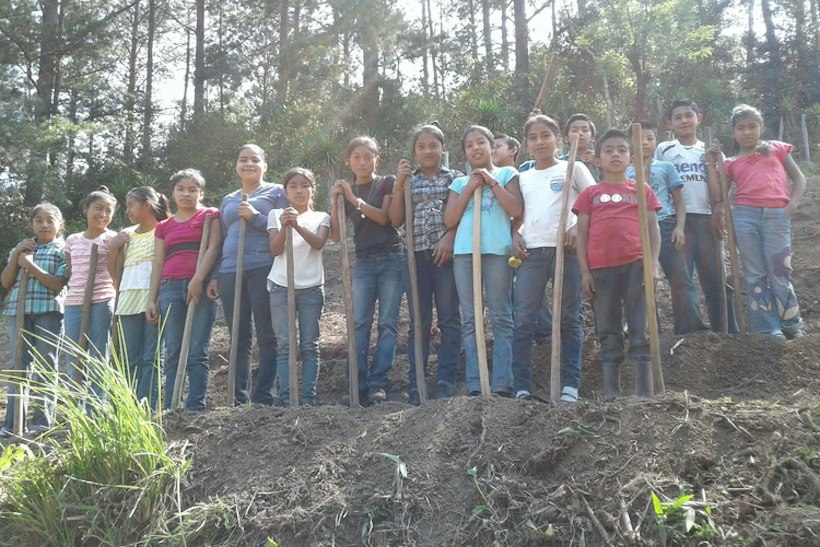
In the initial stage, the program was offered in 12 villages in the departments of Gracias a Dios and Colon. The results of this first phase were not only positive for the local communities but were also noticed by educational authorities as an effective alternative for secondary education in rural areas of the country. Gradually, in collaboration with the government and various actors, the program was introduced into an increasing number of municipal areas. Over time, the system of education provided through the efforts of Asociación Bayan gained national recognition both for the quality of instruction and for its contributions to community life. Currently, the organization offers the SAT program in 12 of the 18 departments of Honduras, with legal recognition from the Ministry of Education, and is implemented under a multisectoral model in which the community, social organizations, and the state are all involved. The government funds 90 percent of the program, including tutors’ salaries.
The experience with the SAT program in Honduras has been highlighted by various entities such as the Brookings Institution, a nonprofit policy organization based in the United States, as an illustration of how new approaches to education can be conceptualized, designed, and delivered. According to the Institution, the SAT program is “catalyzing an education revolution.” One account by an author working at the Institution observed: “It focuses on skills that are beyond the traditional academic skills, such as moral and character development, and it conceives of learning as something much broader,” incorporating community service as a part of its core curriculum. Commenting on the nature of instruction, the institute has highlighted that the lack of a rigid hierarchy in offering the program is an important distinction, as it creates a culture of mutual respect and trust between tutors and students. In 2018, Generation Unlimited—a global public-private partnership convened by UNICEF—recognized the SAT program in Honduras as an innovative solution for extending high quality secondary education to rural areas and contributing to rural development. Among the findings highlighted were that youth who had participated in SAT in a number of villages in Honduras had test scores 45 percent higher than those in neighboring conventional schools.
Beyond the delivery of secondary education, Asociación Bayan is also giving attention to learning how the SAT program is interacting with various processes of community life, such as the education of younger generations, food production, or community health in localities where large numbers of graduates of the program reside. The program is offered annually to over 8,000 people, having reached over 100,000 students in total. In other countries in Latin America, the program has also been offered in the formal education system by organizations in Brazil, Ecuador, Guatemala, and Nicaragua, having reached more than 300,000 participants in total.